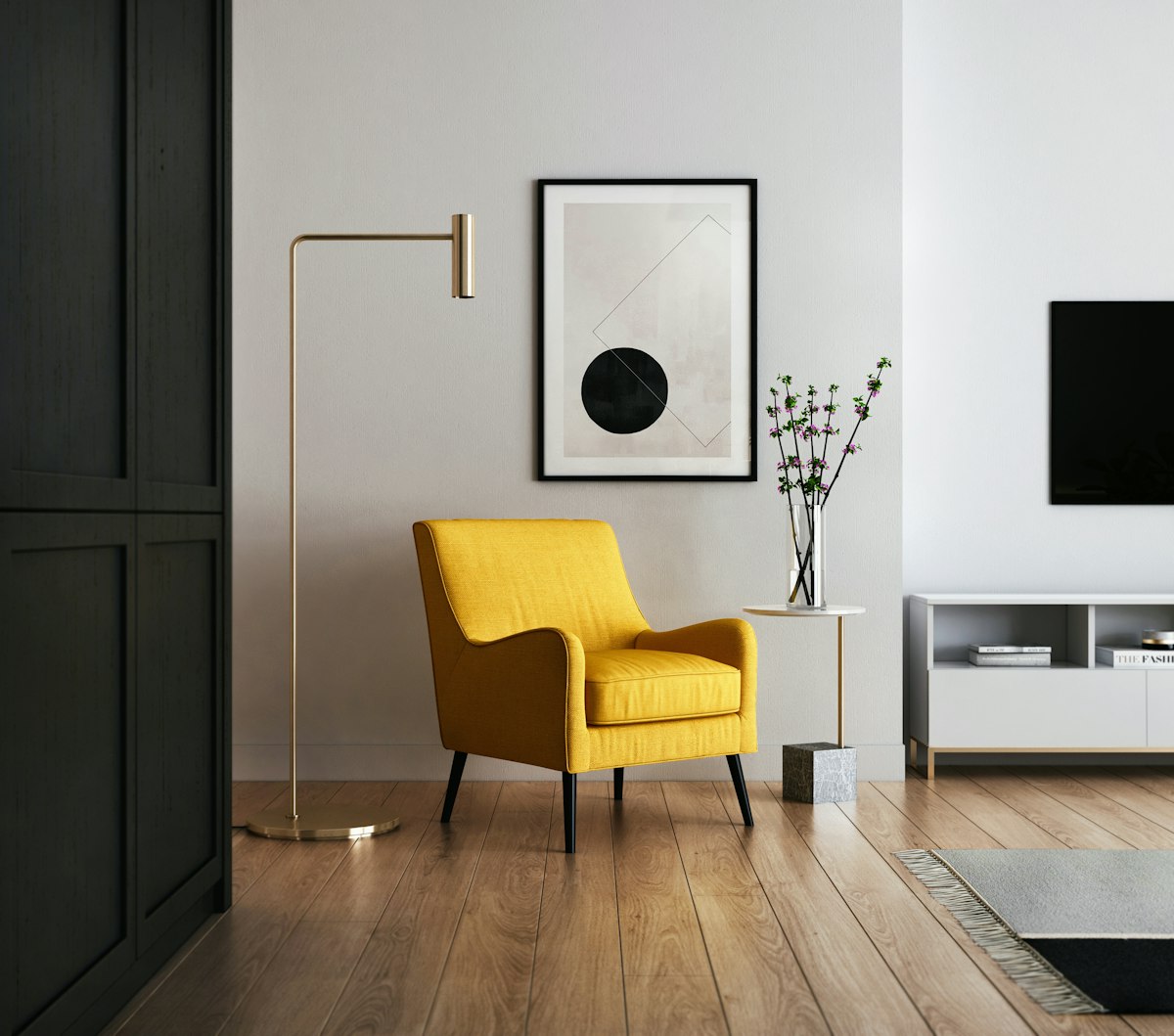
The logic of home staging is simple: the property isn't presented as the owner lived in it, but as the future buyer wants to live in it. It isn't a renovation, and it isn't stage design — it's a focused visual strategy that accelerates the sale process and reduces the negotiation gap.
The data is unambiguous
NAR (National Association of Realtors) surveys show that staging typically results in a 1–5% higher offer price. The industry body RESA (Real Estate Staging Association) reports a significantly shorter time on market from its own data — RESA is the staging industry's own advocacy source, so this figure should be treated with caution. In the Hungarian market the effect is even more pronounced — partly because professional staging is still uncommon here, and partly because most buyers skip otherwise good properties on the basis of weak photos alone.
| Metric | Not staged | Staged | Difference |
|---|---|---|---|
| Average days on market | 87 days | 32 days | −63% |
| Photo click-through rate | 2.1% | 4.8% | +128% |
| Viewings in first 14 days | 6–8 | 14–20 | +120% |
| Average negotiation gap | −4.2% | −1.1% | +3.1 pp |
Source: an unaudited, internal tally of staged cases in ST Management's Budapest portfolio (150 managed properties, current count), complemented by the NAR Profile of Home Staging 2024.
The question isn't whether staging is worth it — it's whether a seller can afford to sit on a property for three months under a 4% heavier negotiation load.
What does it cost — and what does it return?
Staging a typical 50–80 m² Budapest apartment involves three components: deep cleaning and minor repairs (roughly HUF 80,000–150,000), temporary furnishing rented in or drawn from the ST Management stock (HUF 250,000–450,000 for 30 days), and professional photography plus occasional video (HUF 120,000–200,000). Total: HUF 450,000–800,000 — less than 1% of the sale price of an 80–120 million HUF property.
Let's look at an actual case:
- Asking price: approx. HUF 90–95 million (an inner-city Budapest district, roughly 60 sqm, refurbished)
- Staging cost: approx. HUF 600,000
- Days on market (staged): under a month, versus an estimated two and a half months unstaged
- Final sale price: close to the asking price, with only about a 1% negotiation gap
- Expected sale price without staging: roughly 3–4% below the asking price
- Net advantage: approx. HUF 2 million plus a selling process almost a month and a half shorter
This is a real case of ours from the recent past — to protect the client's identity, we withhold the exact district, timing, and figures, giving only rounded orders of magnitude. It isn't unusual: across our portfolio, the net price advantage ranges from 1.6% to 3.2%, typically covering the full staging cost 4–10 times over.
What staging cannot fix
Structural or mechanical issues
Poor windows, a damp bathroom, or cracked walls won't be hidden by staging. If the structural or mechanical condition is weak, address it first — or communicate it openly through pricing. Sweeping things under the carpet only makes a difficult situation more expensive.
Wrong pricing
If the asking price is 15% above the market, no amount of staging will save it. Proper pricing and staging work together — separately, both are weaker. That's why our property consulting and home staging services are always integrated.
When not to stage
Very rarely we recommend against it, but some situations genuinely don't justify staging. Typical examples: the property targets an investor planning to demolish or deeply renovate (often the case with Lake Balaton houses), or the asking price is positioned so attractively that organic interest alone will suffice. In these cases, a professional deep clean and good photography on their own deliver solid returns.
In almost every other case — and especially for apartment sales in Budapest — home staging is no longer a luxury. It's baseline equipment. In competitive listings, the only real question isn't whether to stage, but who does it.